Les beaux chapeaux et la mode ont failli faire disparaître ce bel et grand oiseau blanc.
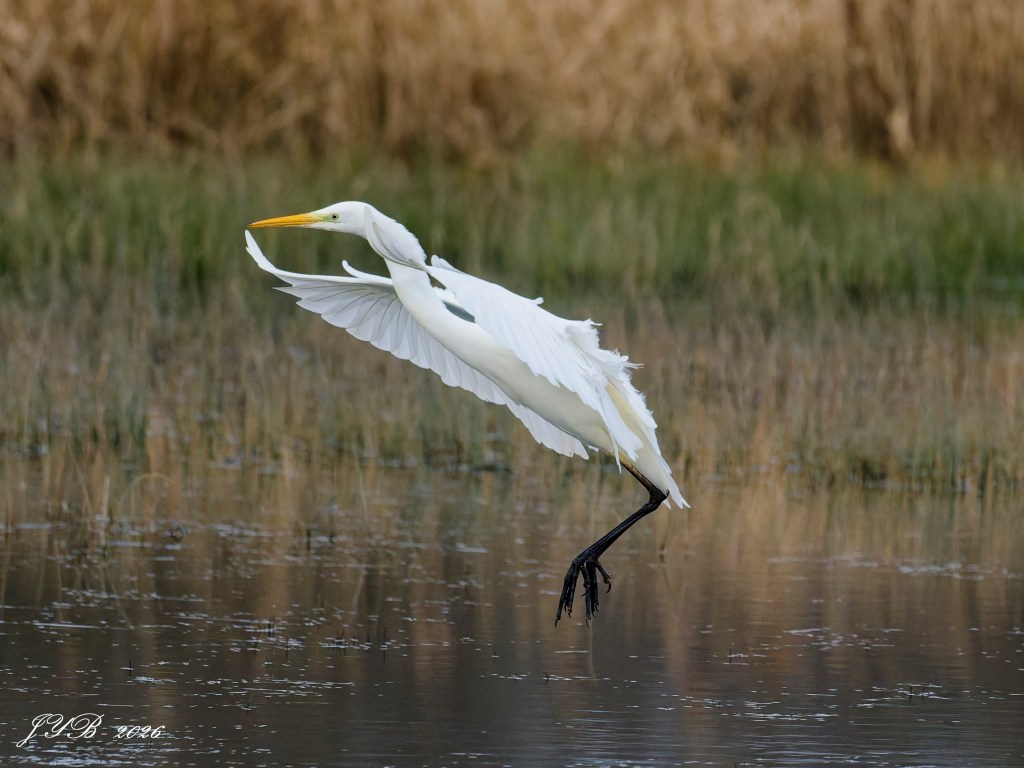
La grande aigrette – Ardea alba – appartient à la famille des Ardéidae (Hérons).
Elle est moins commune que le héron cendré – Ardea cinerea – mais elle est beaucoup plus gracieuse.
Son habitat est surtout constitué de zones humides. Elle s’y nourrit de poissons, d’insectes, de rongeurs, d’amphibiens et de petits reptiles. Les marais, les étangs lui apportent de quoi se nourrir. Les roselières et les arbres lui permettent de nicher.
N’oublions pas que la grande aigrette a failli tout simplement disparaître.
Victime de la beauté de son plumage et de ses aigrettes dont on décorait les chapeaux, il y a quelques décennies, elle renaît depuis quelques années.
La mise sous protection de cette espèce et la préservation de zones humides contribuent notablement à la sauvegarde de ce magnifique oiseau.
En hiver, les grandes aigrettes du nord de l’Europe migrent notamment en France. Ce qui nous donne l’occasion d’en voir un peu plus.
ENGLISH VERSION
The great egret – Ardea alba – belongs to the family of Ardéidae (Herons).
It is less common than the grey heron – Ardea cinerea – but much more graceful.
Its habitat is mainly made up of wetlands. It feeds on fish, insects, rodents, amphibians and small reptiles. The marshes, the ponds provide him with food. The reeds and trees allow him to nest.
Let’s not forget that the great egret almost simply disappeared.
Victim of the beauty of her plumage and her plumes that were decorated in hats a few decades ago, she has been reborn for a few years.
The protection of this species and the preservation of wetlands contribute significantly to the safeguarding of this magnificent bird.
In winter, the great egrets of northern Europe migrate notably to France. This gives us the opportunity to see a little more.


Votre commentaire