Cet oiseau imposant est une cigogne aux mœurs de vautour. Mais pourquoi le qualifie-t-on d’éboueur ?
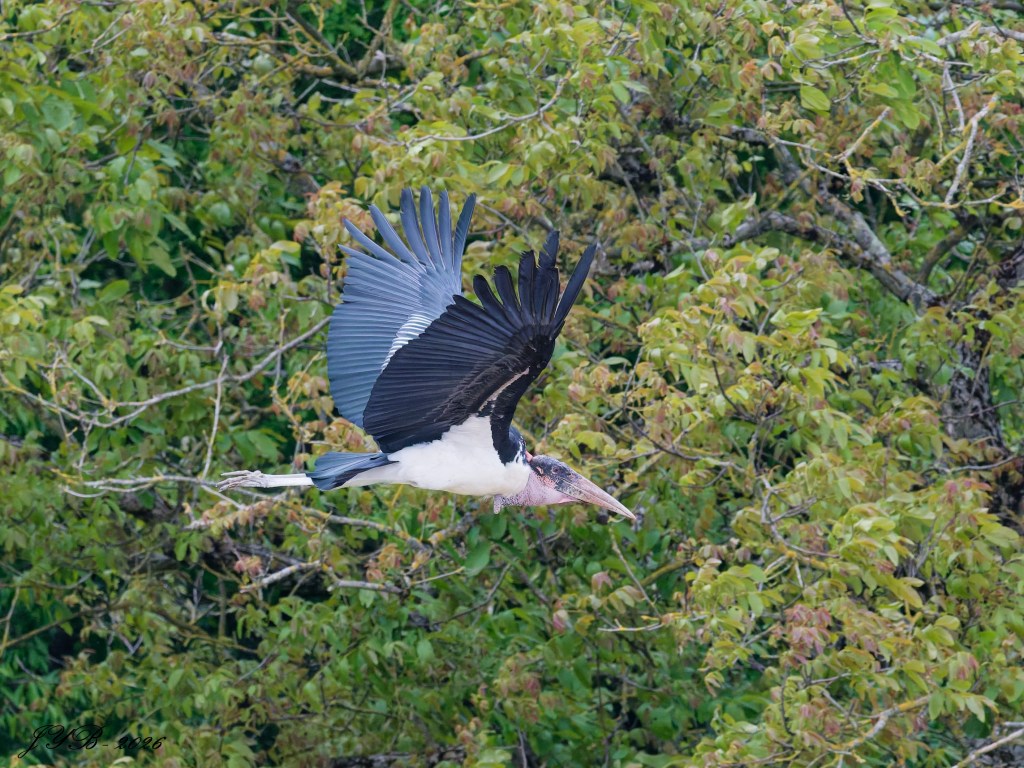
Le marabout d’Afrique – Leptoptilos crumenifer – est un oiseau impressionnant.
De grande taille (150 cm) avec une envergure immense (près de 3 mètres), il ne passe pas inaperçu.
Ses mœurs alimentaires le rapprochent plus du vautour que de la charmante cigogne.
Il se nourrit principalement d’animaux morts. Ce choix alimentaire a un avantage pour lui puisqu’il ne dépense pas trop d’énergie à poursuivre une proie et en même temps il débarrasse l’environnement d’un cadavre dont les bactéries pourraient contaminer le sol et se propager un peu partout.
Il vole assez haut dans le ciel en utilisant les courants d’air chaud pour voler en cercle. Comme un vautour.
C’est à ce titre de mangeur de cadavres qu’il est qualifié d’éboueur parce qu’après son passage (mais aussi celui d’autres animaux comme les « vrais’ vautours), il ne reste plus grand chose sur la carcasse.
Son bec est très puissant et peut plonger profondément dans les chairs de l’animal mort. Sa tête plutôt déplumée évite ainsi d’être salie par le sang et les bouts de chair.
Mais il mange aussi des animaux vivants. Qu’ils soient dans les marais (poissons, batraciens, …) ou dans la végétation alentour. Il gobe les œufs dans les nids et dévorent les poussins. Les insectes comme les criquets lui conviennent aussi très bien.
Des proies qu’il ingurgite en grand quantité. Donc, un oiseau bien utile pour l’équilibre sanitaire de son territoire.
ENGLISH VERSION
The Marabou Stork – Leptoptilos crumenifer – is an impressive bird.
Large in size (150 cm) with a huge wingspan (nearly 3 meters), it does not go unnoticed.
His eating habits bring him closer to the vulture than to the charming stork.
He mainly feeds on dead animals. This food choice has an advantage for him since he does not spend too much energy chasing a prey and at the same time it rids the environment of a corpse whose bacteria could contaminate the soil and spread a bit everywhere.
It flies enough in the sky using hot air stream to circling. Like a vulture.
It is in this capacity as an eater of corpses that he is qualified as a garbage collector because after his passage (but also that of other animals like the ‘true’ vultures), there is not much left on the carcass.
Its beak is very powerful and can dive deeply into the flesh of the dead animal. His rather balded head thus avoids being soiled by blood and bits of flesh.
But he also eats live animals. Whether they are in the marshes (fish, batrachians, …) or in the surrounding vegetation. He sucks eggs in the nests and devours the chicks. Insects like locusts also suit him very well.
Preys that it swallows in large quantities. Therefore, a very useful bird for the health balance of its territory.


Votre commentaire