Un oiseau en noir et blanc, doté de longues pattes rouges que l’on reconnaît aisément. Si les zones humides du bord de mer lui conviennent très bien, l’échasse blanche se rencontre aussi à l’intérieur des terres. Découvrons ce bel oiseau gracile.
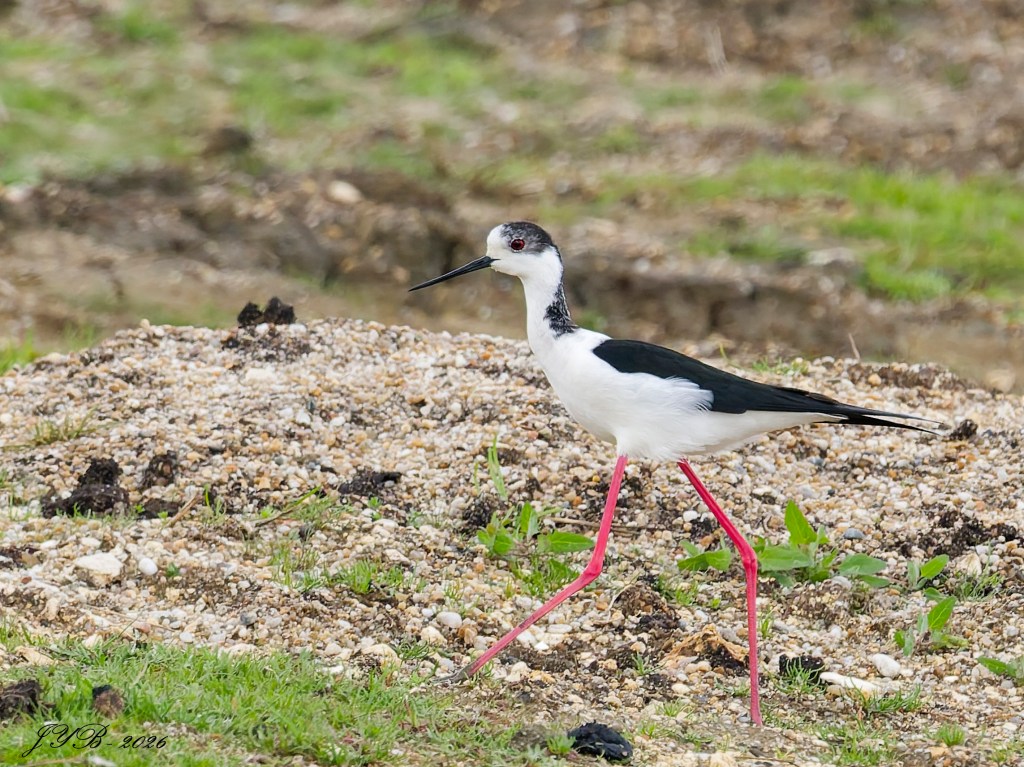
L’échasse blanche – Himantopus himantopus – se reconnaît aisément.
Un oiseau en noir et blanc avec de longues pattes rouges. Enfin presque. La femelle est plus brune que noire et le mâle est, lui, bien noir, mais avec quelques reflets verts.
En France, l’échasse blanche se rencontre surtout en Méditerranée ( de l’Occitanie au Var mais principalement en Camargue) et sur la côte atlantique. On la voit de plus en plus souvent du nord de la France à la Bretagne.
Elle est aussi présente à l’intérieur des terres. La Brenne, la Sologne, la Dombes sont des régions où elle peut nicher. Plus localement, l’échasse blanche est de passage en Haute-Savoie lors de sa migration. Mais il s’agit ici de très peu d’individus.
Son biotope est celui de la zone humide, principalement sur le littoral. Les lagunes, les marais salants, les marais saumâtres lui conviennent très bien. Les prairies humides et les zones humides d’eau douce lui conviennent très bien à l’intérieur des terres.
L’essentiel est qu’elle puisse y trouver de la nourriture. Larves, insectes aquatiques, têtards, vers, crustacés, mollusques sont ses proies préférées. Elle les capture dans des vasières ou des eaux peu profondes. D’où l’importance des inondations qui vont modifier son environnement. Ce qui peut expliquer qu’elle sera ici une année et ailleurs l’année suivante.
ENGLISH VERSION
The Black-winged Stilt – Himantopus himantopus – is easily recognized.
A bird in black and white with long red legs. Well almost. The female is more brown than black and the male is quite black, but with some green highlights.
In France, black-winged stilts are mainly found in the Mediterranean (from Occitania to the Var but mainly in the Camargue) and on the Atlantic coast. We see it more and more often from the north of France to Brittany.
It is also present inland. The Brenne, Sologne, and Dombes are regions where it can nest. More locally, the black-winged stilt is passing through Haute-Savoie during its migration. But here we are talking about very few individuals.
Its biotope is that of the wetland, mainly on the coastline. The lagoons, the salt marshes, the brackish marshes suit him very well. Wet meadows and freshwater wetlands suit him very well inland.
The essential thing is that she can find food there. Larvae, aquatic insects, tadpoles, worms, crustaceans, mollusks are its favorite prey. It captures them in mudflats or shallow waters. Hence the importance of floods that will modify its environment. Which may explain why she will be here one year and elsewhere the following year.


Votre commentaire