Le temps où le martinet noir nichait dans les falaises semble aujourd’hui bien loin. Si nos constructions lui ont été très utiles, l’évolution de notre société et de son style architectural met en difficulté cet extraordinaire chasseur d’insectes. Il y a peut-être des solutions pour aider notre martinet noir.
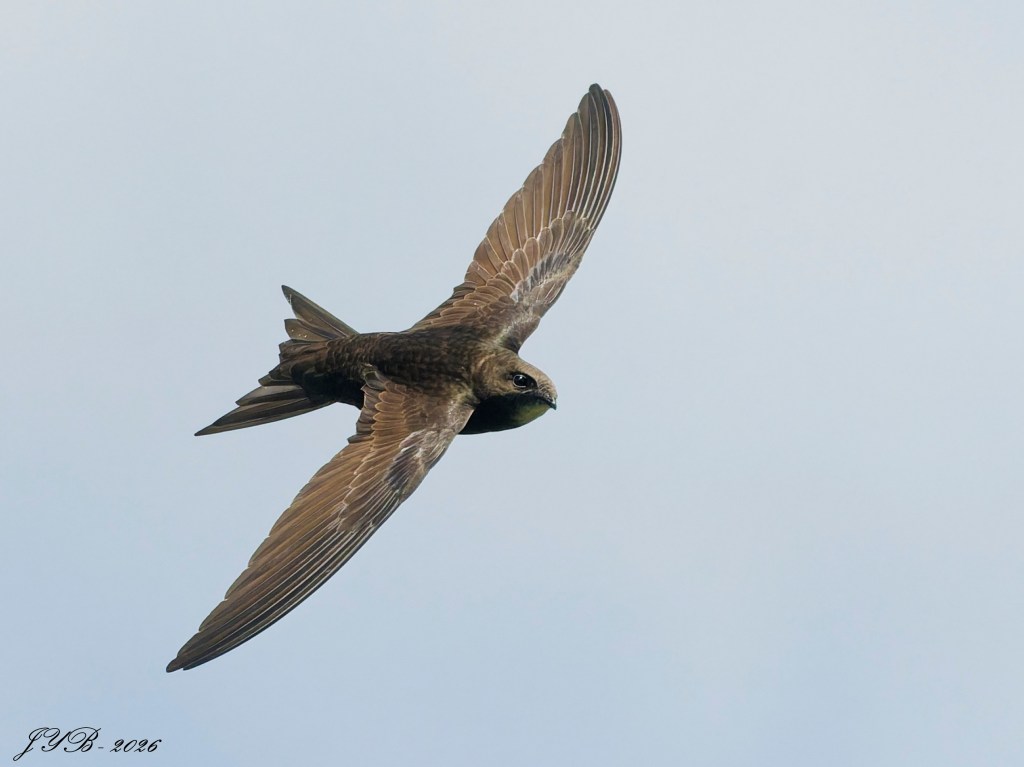
Le martinet noir – Apus apus – est un oiseau migrateur très attendu et apprécié.
S’il y a très longtemps, le martinet noir nichait dans les falaises, il a vite compris l’intérêt de bâtir un nid sur les bâtiments que les humains se sont mis à construire au fil des siècles.
Mais l’oiseau est méfiant et rechigne à nicher dans des bâtiments trop bas. Les prédateurs y auraient accès trop facilement et le décollage plus délicat. Il recherche donc des constructions assez hautes.
Mais l’architecture évolue. L’avènement du béton et du verre a bien changé la configuration des bâtiments. La rénovation également.
Le martinet noir s’est donc trouvé face à une raréfaction des sites de nidification.
Mais, c’était sans compter sur l’aide des humains pour ce précieux chasseur d’insectes et de plancton aérien.
La pose de nichoirs est une solution. Aujourd’hui, il existe aussi des briques-nichoirs que l’on peut incorporer dans un mur. Ces briques sont donc creuses et plus protectrices pour les oiseaux qu’un nichoir extérieur. C’est aussi plus esthétique pour le bâtiment et ne nécessite pas de nettoyage (parait-il).
Ces briques seraient aussi plus fraîches qu’un simple nichoir. Reste à voir quand les températures sous les toits peuvent atteindre les 60° c, précipitant les oisillons au sol.
Certes le martinet noir s’adapte à nos constructions. Mais s’adaptera-t-il à notre climat et à la raréfaction des insectes ?
ENGLISH VERSION
The common swift – Apus apus – is a highly anticipated and appreciated migratory bird.
If long ago, the common swift nested in the cliffs, he quickly understood the value of making a nest on the buildings that humans have started to build over the centuries.
But the bird is suspicious and balks at nesting in buildings that are too low. Predators would have access to it too easily and the takeoff more delicate. He therefore seeks rather tall constructions.
But architecture is evolving. The advent of concrete and glass has indeed changed the configuration of buildings. Renovation too.
The common swift has therefore found itself faced with a scarcity of nesting sites.
But, it was without counting on the help of humans for this valuable hunter of insects and aerial plankton.
Installing nest boxes is one solution. Today, there are also nest bricks that can be incorporated into a wall. These bricks are therefore hollow and more protective for birds than an outdoor nest box. It is also more aesthetic for the building and does not require cleaning (it seems).
These bricks would also be fresher than a simple nest box. It remains to be seen when the temperatures under the roofs can reach 60° c, precipitating the chicks on the ground.
Of course, the common swift adapts to our constructions. But will it adapt to our climate and the increasing scarcity of insects?


Votre commentaire